Defect Detection Systems
Camera-based checks for visible defects, missing areas, incorrect features, or abnormal product conditions.
Helps reduce manual checking and gives operators a clearer OK/NOK decision path.
Helping manufacturers automate quality checks, validate parts, and reduce manual inspection using camera-based inspection systems.
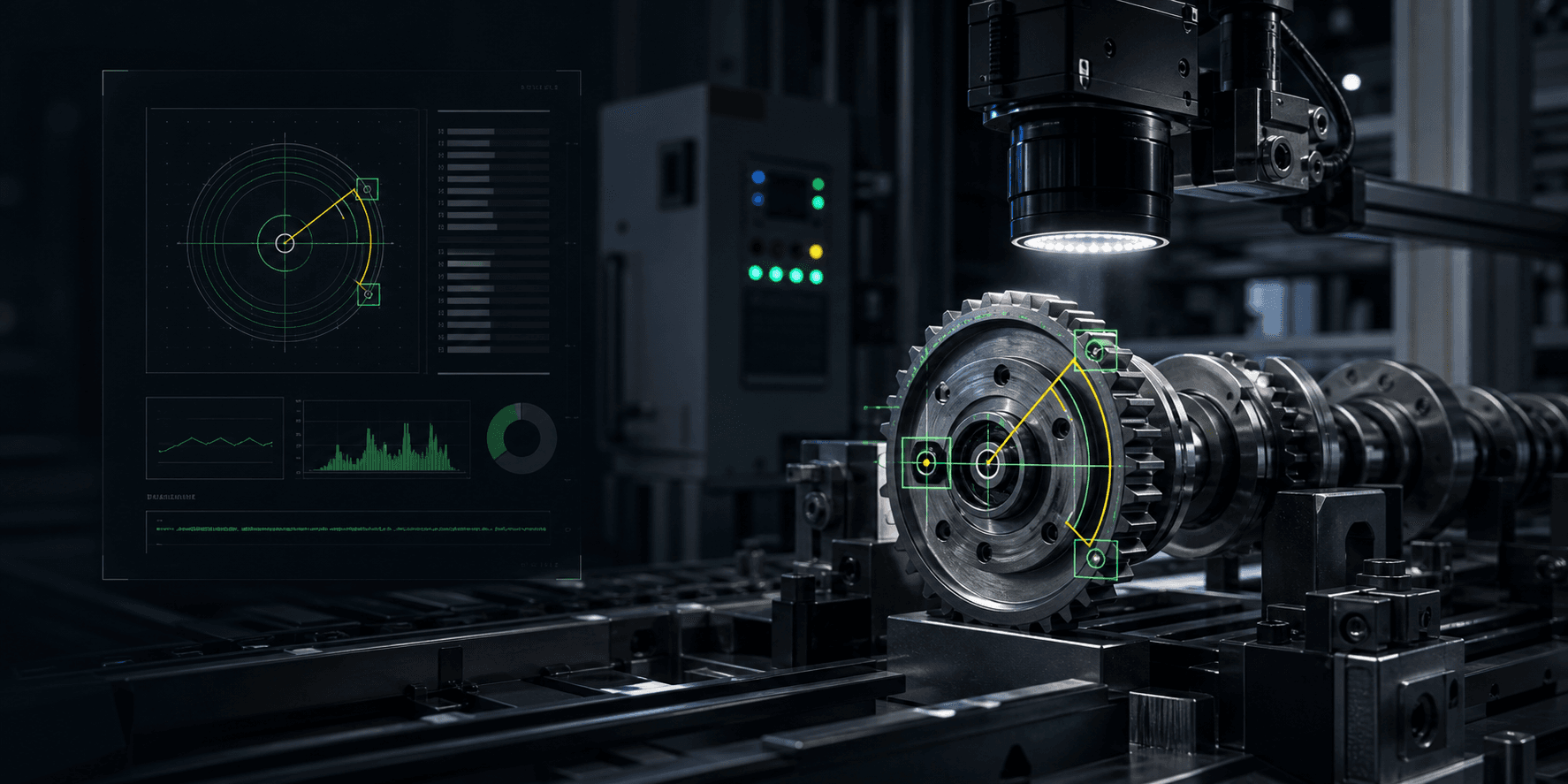
Camera-based checks for visible defects, missing areas, incorrect features, or abnormal product conditions.
Helps reduce manual checking and gives operators a clearer OK/NOK decision path.
Inspection logic to confirm whether required parts, holes, labels, or components are present before the next process step.
Helps catch assembly mistakes earlier and supports more consistent quality control.
Custom inspection workflows that combine cameras, decision rules, operator screens, and result logging.
Turns repeatable visual checks into a structured inspection process.
Vision systems for angle checks, dimensional references, alignment checks, and feature position validation.
Useful where manual judgement is slow, inconsistent, or hard to document.
Inspection systems that receive machine triggers and return inspection results to the automation process.
Helps connect quality decisions with the existing production sequence.
Simple screens for operators to view inspection status, PASS/FAIL results, images, and basic process feedback.
Makes inspection systems easier to use on the shop floor.
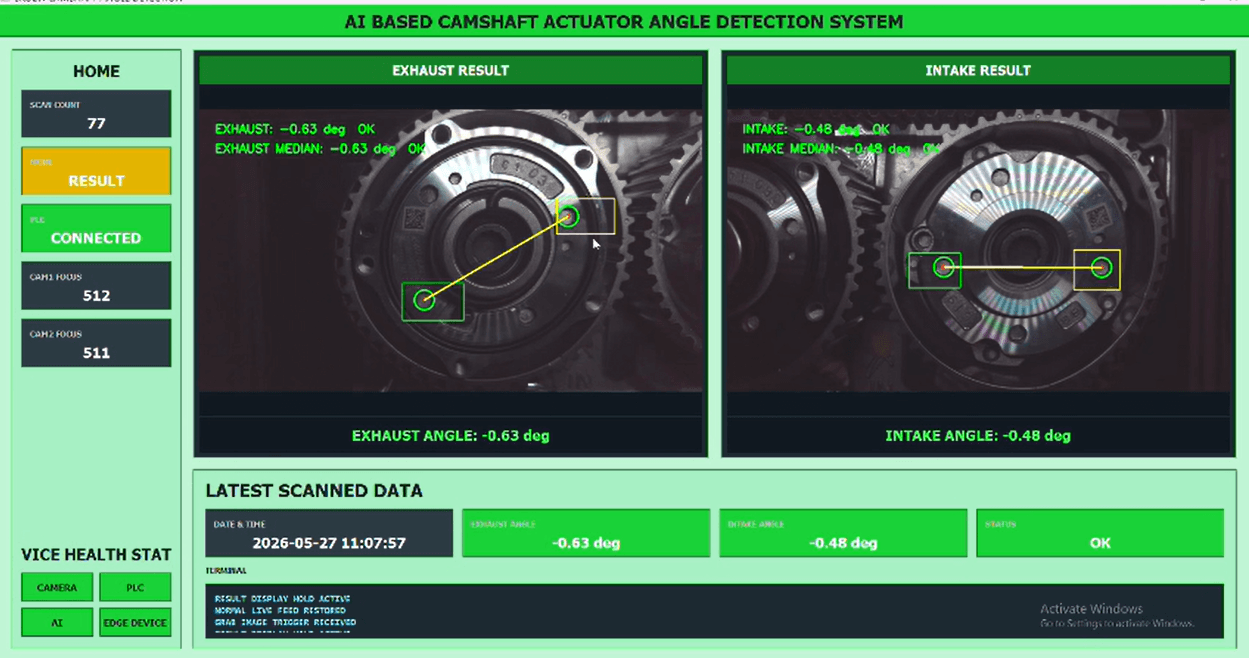 Inspection
A camera-based inspection project focused on checking camshaft angle position and giving a clear PASS/FAIL decision to support quality inspection.
Manual angle checking can depend on operator judgement and may slow down repeatable inspection work.
The inspection needed a clear decision workflow, image processing logic, operator visibility, and a path for PLC-triggered operation.
Built a vision workflow that captures the inspection image, analyzes the camshaft position, displays the result on an operator interface, and prepares the result for automation handoff.
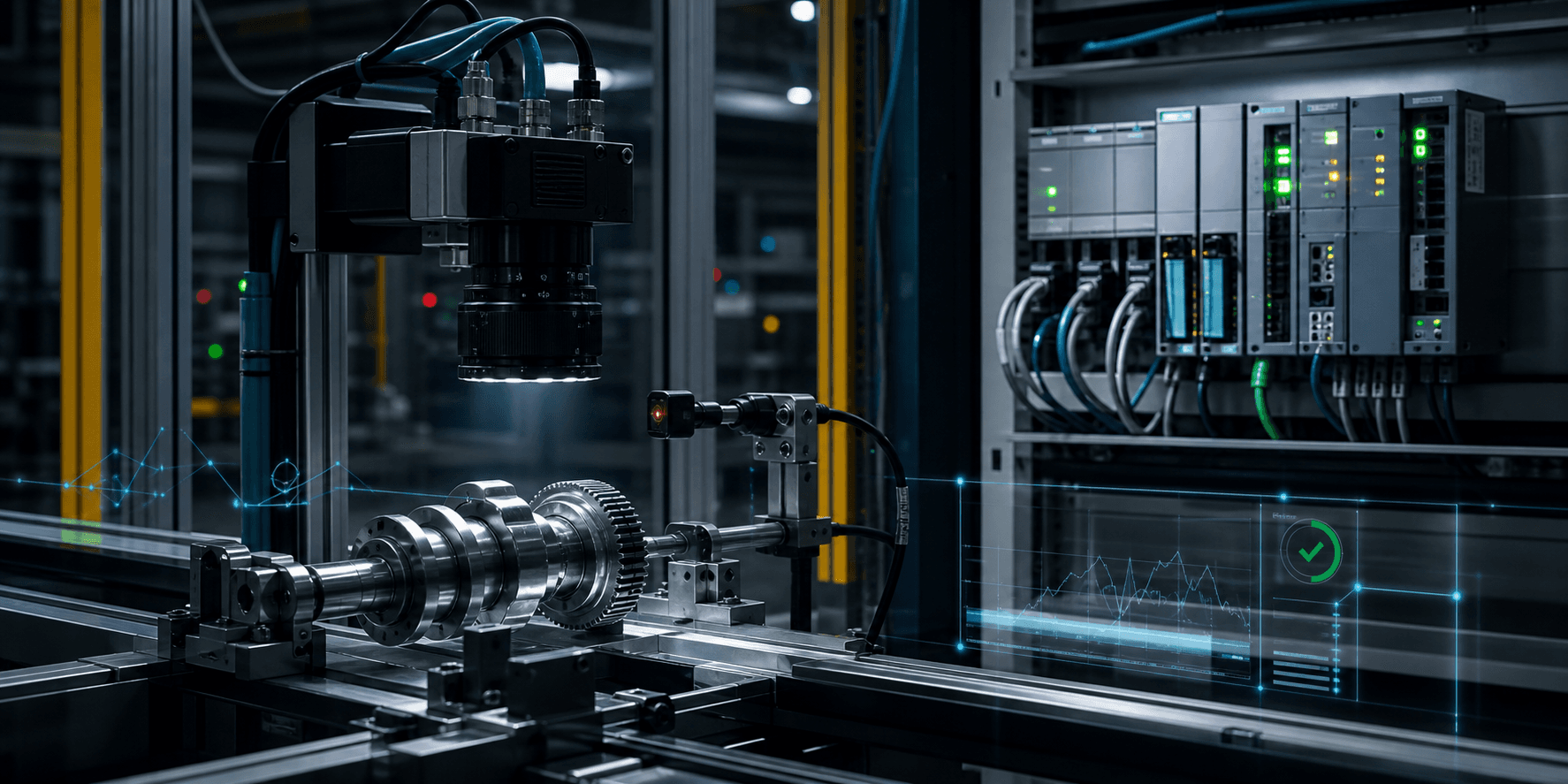 Automation
A machine-vision workflow designed around PLC triggers, inspection decisions, and result communication for production-style automation.
A vision system is only useful in manufacturing when it can fit into the machine sequence instead of working as a disconnected demo.
The system needed to read inspection triggers, process images, and return useful result states for downstream machine logic.
Created a PLC communication pattern where the inspection node can receive a trigger, run the vision check, and write result data back for the automation process.
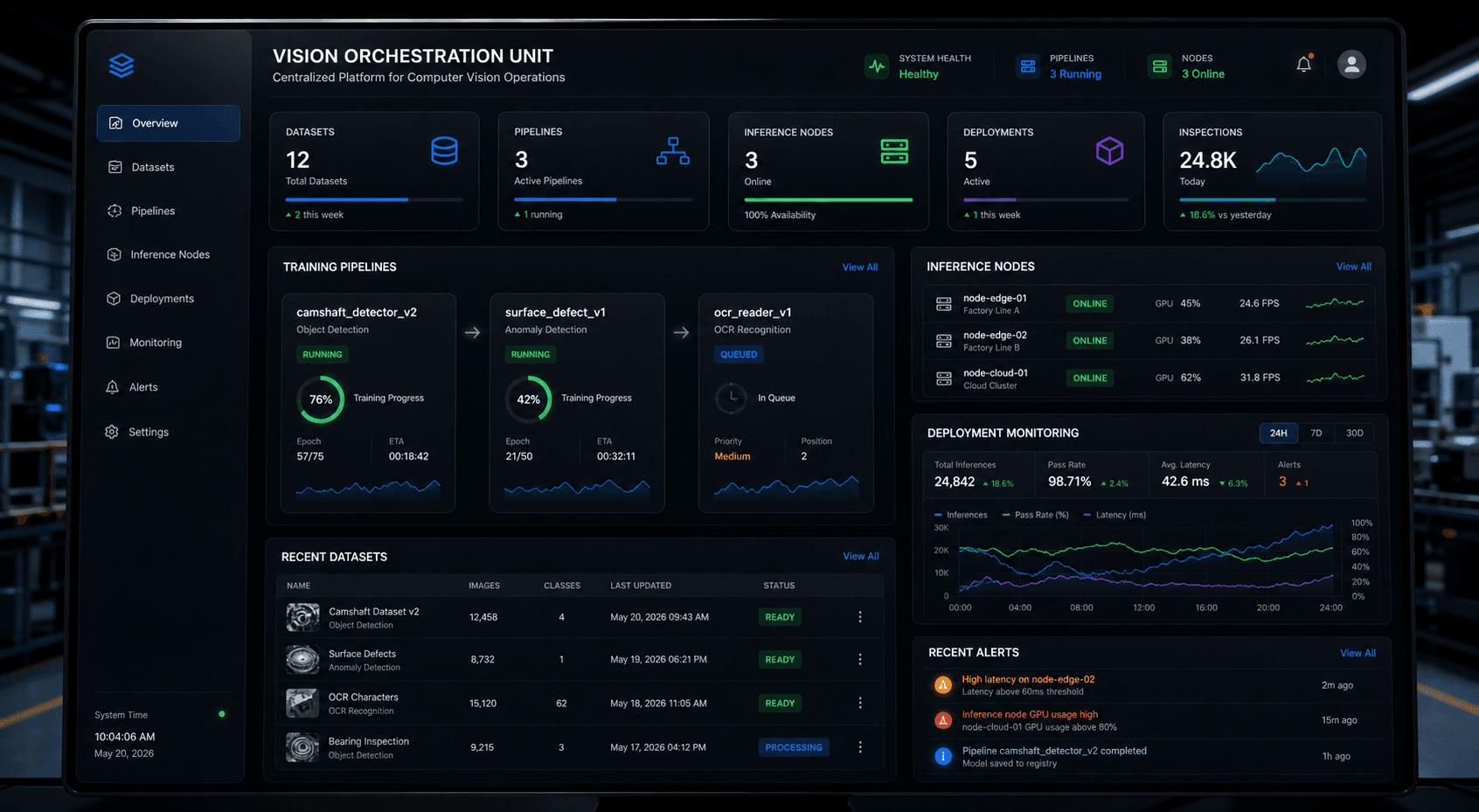 Workflow
A software concept for organizing machine-vision work from data handling to controlled model and workflow management.
Vision projects can become hard to manage when images, models, tests, and deployment notes are scattered.
The system needed a more organized way to track project assets, training work, and deployment readiness.
Designed a control-plane style workflow to manage datasets, model versions, inference nodes, and inspection project status.
The dedicated proof page is structured for demo videos, screenshots, output samples, certificates, and real setup photos.
A short walkthrough showing image capture, inspection decision, operator screen, and PLC/result workflow.
Current project visuals show inspection, PLC workflow, and orchestration concepts already used across the portfolio.
Before/after examples, OK/NOK result screens, annotated detections, and rejected-part examples.
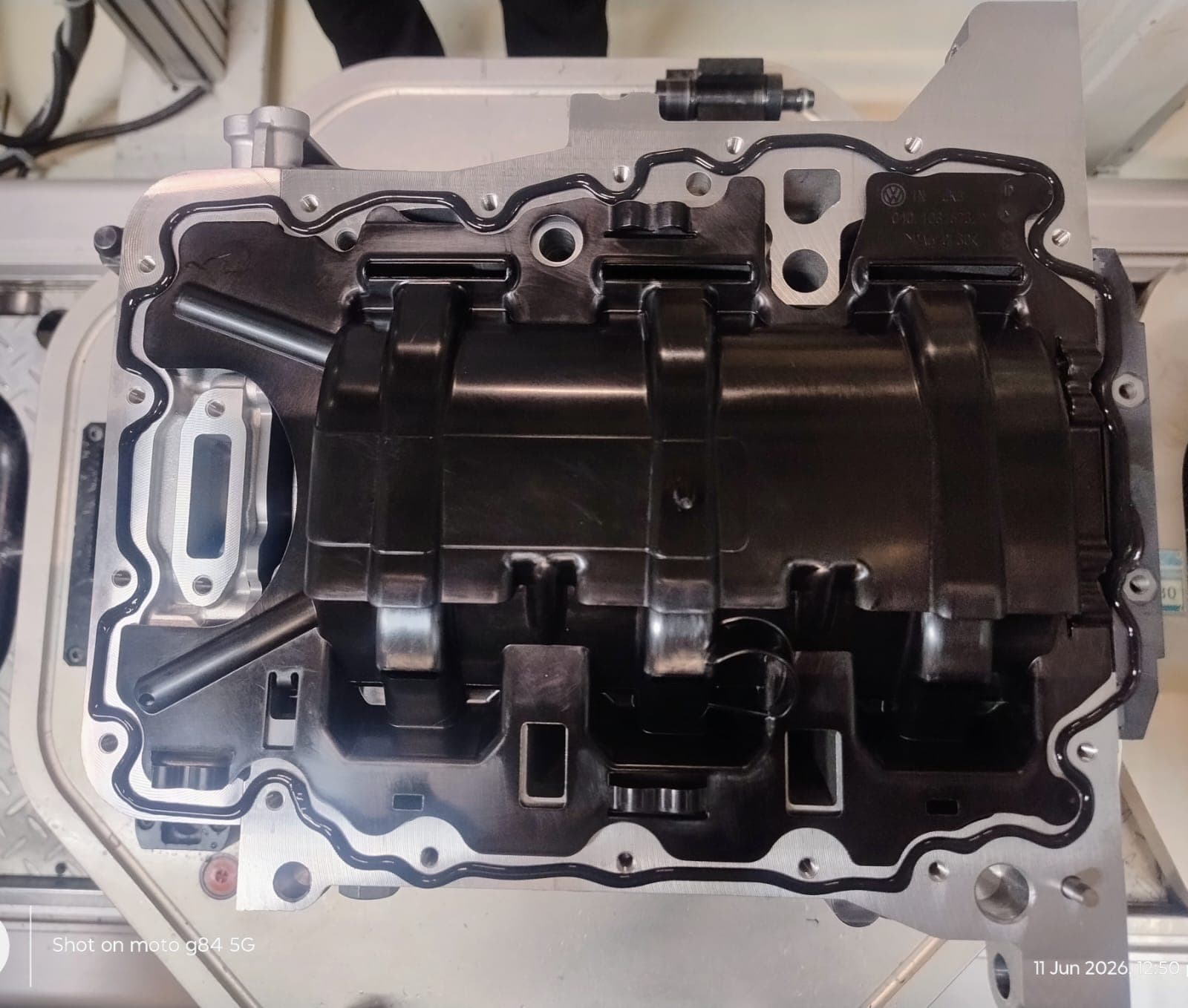 In Development
This project is being developed as a camera-based quality inspection workflow for sealant application checks. It is not presented as a completed deployment.
My work is shaped by mechatronics, automation interest, and hands-on camera inspection projects. I focus on understanding the inspection requirement first, then choosing the right technical approach.
Share what needs to be inspected, how the current process works, and what decision the system should make.